Updated on:
October 20, 2026
Canada and Japan Can Build Greater Prosperity and Security Together
by

Goran Samuel Pesic
Posted on:
October 20, 2026
To see full published article, click here.
To see full published article, click here.

Media Contact
Katie Majkowicz
Digital Marketing & Communications Specialist
Samuel Associates Inc.
Digital Marketing & Communications Specialist
Samuel Associates Inc.
(613) 292-3936
km@samuel.associates
Related Article
No items found.
No items found.
No items found.

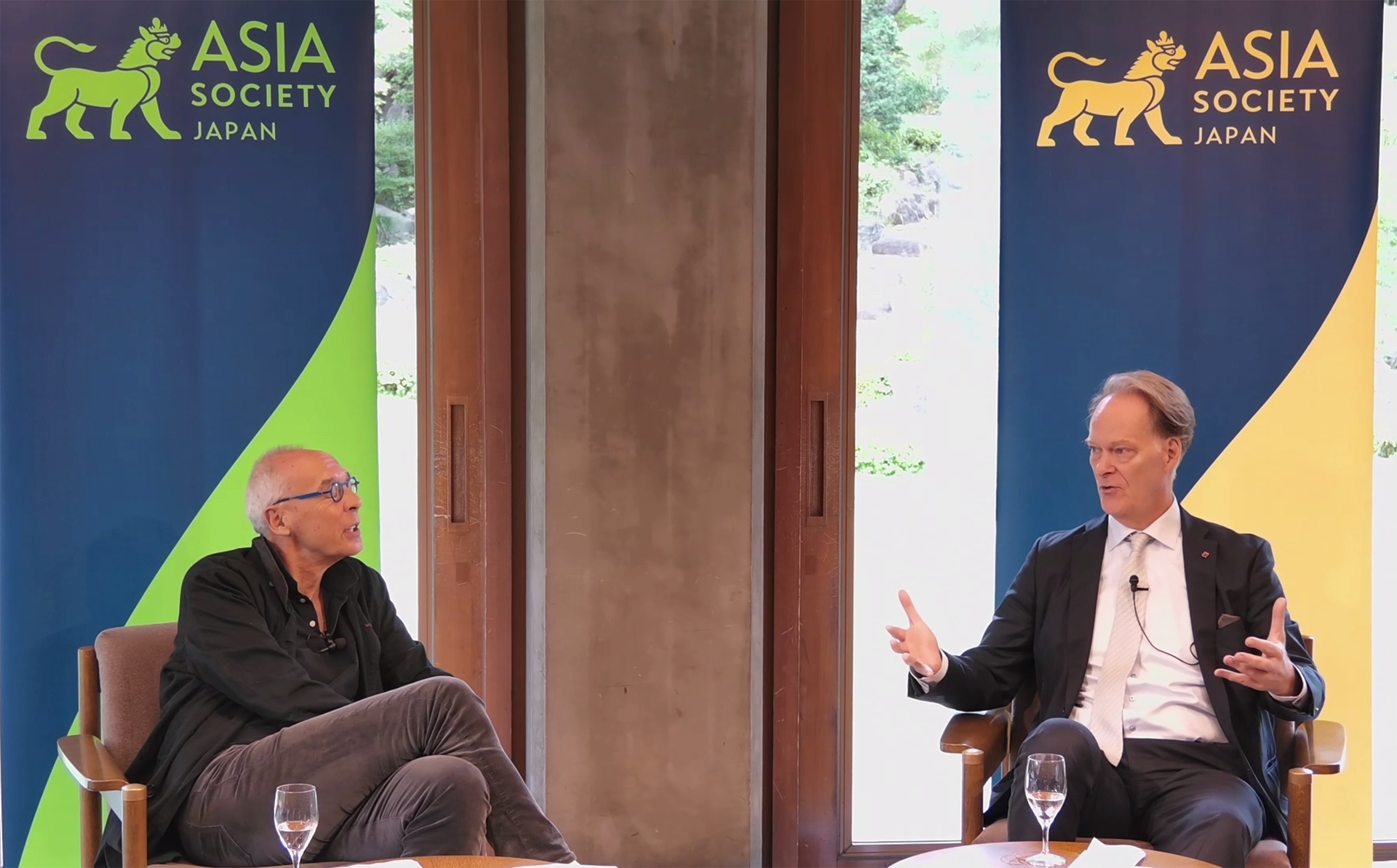
I recently participated in a Canada–Japan dialogue organized by the Asia Society Japan Center, featuring His Excellency Ian G. McKay, Canada’s Ambassador to Japan and Special Envoy for the Indo-Pacific, and moderated by Jesper Koll. The discussion offered a thoughtful assessment of a relationship increasingly shaped by economic security, industrial cooperation and the need for dependable international partners.
Ambassador McKay described a bilateral relationship that has grown stronger and more strategic. What stood out to me was the opportunity to give that relationship a more concrete purpose: helping both countries become more productive, prosperous and secure. The next phase should be measured by what Canada and Japan can accomplish together and the lasting benefits they create for their people.
A common goal for the next decade
Canada and Japan established a Comprehensive Strategic Partnership in March 2026, supported by a roadmap covering defence, economic security, trade, energy and exchanges between their people. That provides an important framework. Its value will depend on the choices governments and businesses make within it.
In my view, mutual productivity should become a central objective. We should ask how cooperation can help firms in both countries develop better technologies, improve production and compete more effectively in international markets. This would give the relationship a practical economic purpose that business leaders and citizens can understand.
The strengths discussed at the dialogue suggest a promising starting point. Canada brings resources, research capabilities and skilled people. Japan brings industrial expertise, advanced manufacturing and investment capacity. Connecting those strengths more deliberately could help Canadian innovations reach commercial scale and give Japanese companies new opportunities to develop and produce with Canadian partners.
The ambition should be reciprocal. Canadian companies should have opportunities to grow in Japan and participate in Japanese supply chains, while Japanese investment should help expand productive capacity in Canada. The strongest partnerships will give each side a clear commercial reason to remain invested over time.
Economic security needs investment
The Ambassador’s remarks on energy, food and critical minerals illustrated how commercial relationships are becoming central to national resilience. He also emphasized Japan’s parallel priorities of energy security and decarbonization. Canada’s ability to contribute to both gives the relationship considerable scope for long-term cooperation.
My assessment is that Canada should use this interest to advance projects that increase the value created here. Long-term supply arrangements and Japanese investment could support Canadian production, processing and infrastructure, while providing Japanese industry with more dependable inputs. Joint work on cleaner industrial processes could bring further benefits to both economies.
Commercial discipline will matter. A project must have credible demand, financing and a realistic path to delivery. For Canada, that means making investment decisions easier through clear processes, early engagement with Indigenous partners and affected communities, and timely resolution of infrastructure constraints. Our reputation for reliability must be reflected in our ability to complete projects.
Defence cooperation should build industrial capability
The discussion also highlighted expanding defence and security cooperation, including military interoperability, maritime security and defence industry collaboration. The bilateral strategic roadmap explicitly supports deeper cooperation between Canadian and Japanese defence companies and the development of their supply chains.
From my perspective as President and CEO of Samuel Group, this deserves sustained attention. I see opportunities worth examining across defence and aerospace, maritime technologies, advanced manufacturing and equipment sustainment. The objective should be partnerships that help both countries develop capability and maintain it over its full service life.
Meaningful industrial participation requires companies to have defined responsibilities and opportunities to build expertise. Canadian firms, including smaller suppliers, should be able to contribute to development, production and long-term support. Japanese partners should gain capable collaborators who can strengthen their own products and supply networks. Clear customer requirements and workable technology-sharing arrangements will be essential to making these opportunities commercially viable.
A broad agenda requires clear priorities
One of the most valuable parts of the dialogue concerned the choices governments must make when their ambitions exceed their available capacity. Ambassador McKay stressed the importance of concentrating effort where there is practical progress and mutual interest. Jesper Koll’s emphasis on specific projects and credible investment terms brought a useful business perspective to that discussion.
I agree with that emphasis. Canada and Japan should identify a manageable portfolio of projects with committed partners, clear responsibilities and realistic timelines. Ministers and senior executives can help resolve obstacles, while project teams remain accountable for delivery. Progress should be visible in investment committed, technologies adopted and new business generated.
Innovation cooperation would particularly benefit from this approach. The Ambassador described links among researchers, universities, technology companies and commercialization organizations. To build on those connections, we should involve industrial customers early, fund demonstrations and establish a route from successful research to production. That is where collaboration can begin to change the productivity of an economy.
For companies considering either market, the practical implication is to arrive with a clear proposition: a capability to contribute, a problem to solve and a partner with whom to build. Government engagement is most useful when it helps move a well-defined commercial opportunity forward.
The relationship must deliver for people
The dialogue also returned to the importance of students, researchers and personal relationships. Those exchanges help create the familiarity and trust on which long-term cooperation depends. They deserve attention alongside major industrial projects because they develop the people who will eventually lead them.
The public should be able to see the benefits of a closer partnership in skilled employment, opportunities for smaller businesses and more dependable access to essential goods and technologies. Explaining those benefits clearly will help sustain support for cooperation beyond individual visits or announcements.
As Canada and Japan approach the centenary of diplomatic relations in 2028, we have an opportunity to define the next decade with greater precision. I would like that milestone to be accompanied by a record of joint projects already creating value in both countries, with opportunities for the next generation to carry them forward.
I thank the Asia Society Japan Center, Ambassador McKay and Jesper Koll for a substantive and candid exchange. I came away convinced that Canada and Japan have the foundation for a more ambitious partnership. The responsibility now is to give that ambition practical expression through the investments and industrial relationships we choose to build.
To see full published article, click here.

To see full published article, click here.