Updated on:
April 9, 2026
CAF Outlook Series: The Quiet Reorientation of Canada’s Navy
by

Samuel Associates
Posted on:
April 9, 2026
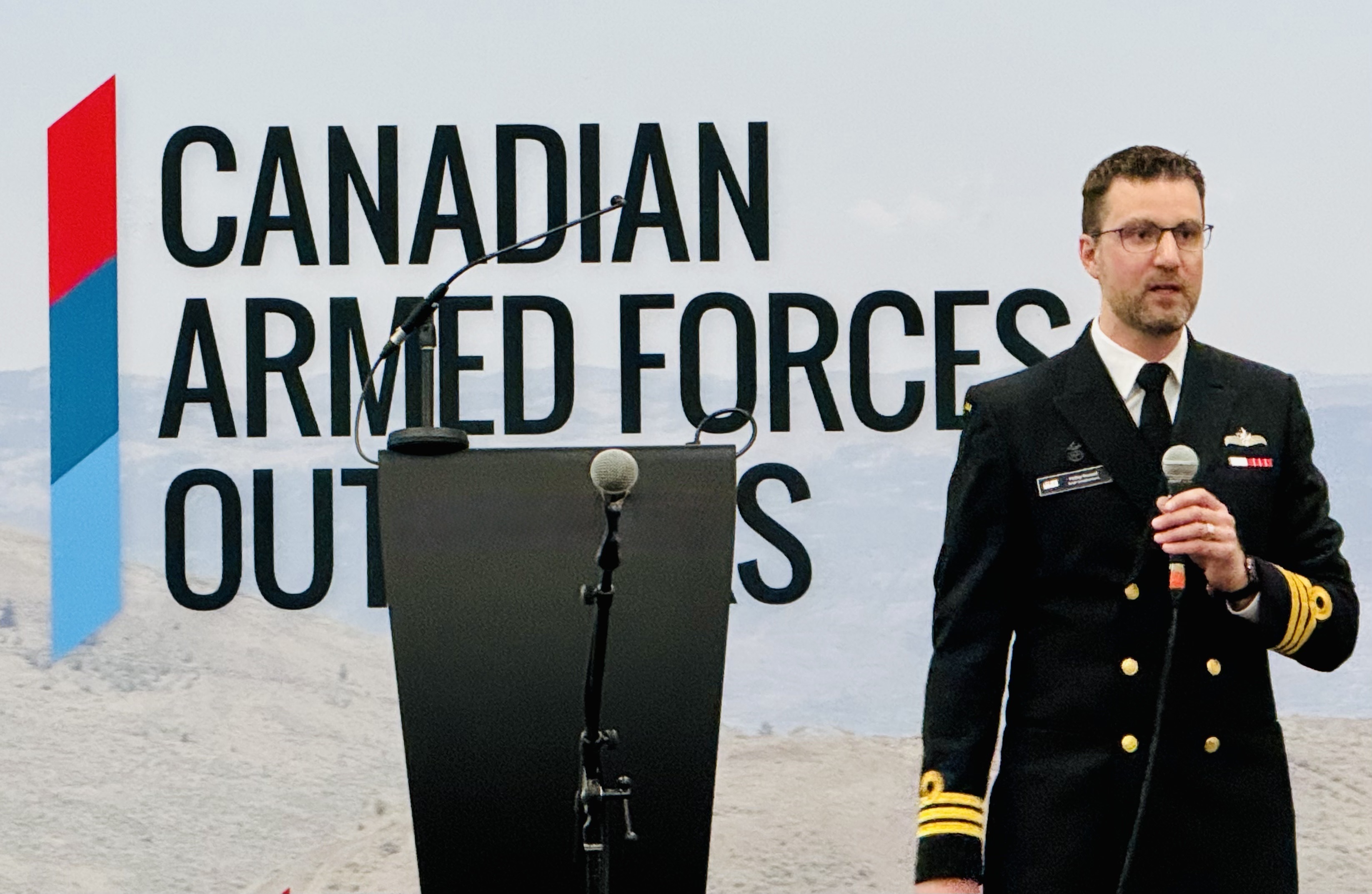
Day three of the CAF Outlook Series focuses on the Royal Canadian Navy key success factors.
To see full published article, click here.
To see full published article, click here.
%4010x.png)
Media Contact
Katie Majkowicz
Digital Marketing & Communications Specialist
Samuel Associates Inc.
Digital Marketing & Communications Specialist
Samuel Associates Inc.
(613) 292-3936
km@samuel.associates
Related Article
No items found.
No items found.
No items found.

Day three of the CAF Outlook Series focuses on the Royal Canadian Navy, and in doing so it captures a larger truth about Canada’s defence posture at a moment of unusual strategic convergence. There are moments in defence policy when alignment occurs almost by accident, when political will, public sentiment, strategic necessity, and institutional readiness converge just long enough to permit meaningful change. Canada’s naval enterprise appears, for now, to be living through such a moment.
A Moment of Strategic Alignment
For much of the post–Cold War period, the Royal Canadian Navy (RCN) operated in a space of managed decline and cautious modernization, its ambitions constrained by fiscal realities and a geopolitical environment that rarely demanded urgency. That era has ended. What has replaced it is not merely a more dangerous world, but a more demanding one, where the scale of Canada’s maritime responsibilities, particularly in the Arctic, has collided with the limitations of its traditional tools.
The result is not a dramatic overhaul announced in sweeping policy terms, but something quieter and potentially more consequential: a gradual reorientation in how the Navy understands capability itself.
From Platforms to Awareness
For generations, naval power has been expressed in steel. Frigates, destroyers, and submarines served as the primary currency of maritime capability. The language of power was the language of platforms, each vessel a discrete expression of national intent.
That model, while not obsolete, is increasingly insufficient. Canada’s maritime geography is vast, remote, and operationally unforgiving. Presence alone is no longer an adequate measure of control. To patrol every approach is impossible. To know what is happening within them, however, may not be.
What is emerging is a different conception of maritime power, one defined less by presence than by awareness. The Navy’s evolving requirements point toward a layered architecture of sensing and surveillance: autonomous underwater systems operating in persistent patrol, distributed sensor networks across Arctic approaches, containerized capabilities deployable across multiple vessels, and data environments that fuse information from seabed to space.
This is not simply a technological evolution. It is a strategic adaptation to geography. In a domain where distance overwhelms traditional patrol models, awareness becomes sovereignty’s most practical expression.
The Arctic as the Strategic Centre of Gravity
Nowhere is this shift more evident than in the Arctic, where the gap between what Canada can physically control and what it must strategically understand has become increasingly pronounced.
The region’s scale defies conventional approaches. Ships cannot be everywhere. Aircraft cannot remain indefinitely. Human presence, while symbolically powerful, is operationally limited.
The answer lies in persistence without presence. Autonomous systems, once treated as experimental adjuncts to traditional fleets, are moving toward the centre of the operational concept. They offer endurance without fatigue, reach without proportional increases in manpower, and the ability to monitor environments that are otherwise inaccessible.
This shift reflects a deeper reality. Sovereignty is no longer demonstrated solely through presence. It is exercised through awareness.
Autonomy and the Logic of Constraint
The rise of autonomous systems within the Navy’s planning is not driven by technological enthusiasm alone. It is a response to structural constraint.
Canada faces enduring personnel shortages, expanding operational demands, and a maritime environment that grows more complex by the year. Autonomous systems offer a means to reconcile these pressures. They extend reach without requiring proportional increases in manpower and enable persistence in environments where human presence is costly or impractical.
In this context, autonomy becomes a form of strategic leverage. It allows the Navy to do more with limited resources while maintaining continuous operational awareness.
The Human Dimension of Capability
Even as the Navy embraces new technologies, it remains constrained by a less visible but equally significant factor: experience.
The departure of seasoned personnel, combined with the influx of less experienced replacements, has created a capability gap not only at sea but within the procurement system itself. This affects decision-making, slows processes, and reduces the system’s ability to absorb innovation.
At the same time, younger sailors encounter a technological environment that often lags behind the digital standards they experience in civilian life. Outdated interfaces and legacy systems create friction in both training and retention.
The result is a paradox. The Navy must modernize its systems to retain its people, while relying on those same people to deliver modernization.
Procurement and the Problem of Time
Overlaying these dynamics is a procurement system that remains structurally misaligned with the pace of strategic change.
Even relatively modest capability programs are subject to timelines that extend over years. In a rapidly evolving threat environment, such timelines risk rendering solutions obsolete before they are delivered.
There is growing recognition that this model must evolve. Efforts are underway to engage industry earlier, adopt iterative approaches, and accelerate delivery where possible.
Yet the challenge is not purely procedural. It is cultural. Canada’s defence procurement system has long prioritized certainty over speed. The current environment demands a recalibration, one that accepts managed risk in exchange for timely capability.
Industry as a Strategic Partner and Enabler
The Navy’s relationship with industry is also undergoing a quiet transformation. Requirements are increasingly defined in operational terms, leaving room for industry to propose solutions.
This approach positions industry not simply as a supplier, but as a co-architect of capability. It creates space for innovation and allows new ideas to shape program development from the outset.
At the same time, it requires trust on both sides. Government must be willing to engage openly with industry, and industry must be prepared to deliver solutions that meet evolving operational needs.
The success of this model will depend on the strength of that partnership.
Domestic Capacity and National Resilience
A parallel emphasis on domestic capability reflects a broader strategic logic. In an era of contested supply chains and geopolitical uncertainty, industrial capacity is inseparable from national security.
The view that much of Canada’s naval capability can be sourced domestically speaks to a desire for resilience and strategic autonomy.
However, this ambition introduces its own challenges. Scaling domestic production, integrating advanced technologies, and doing so at speed will require coordination across government and industry, as well as sustained investment.
The question is not whether Canada has the capability. It is whether it can mobilize that capability quickly enough.
A Narrow Window for Action
The broader context in which these developments are unfolding is both enabling and fragile. Public awareness of defence issues has increased, political willingness to invest has strengthened, and industry engagement is active.
But such conditions are rarely permanent. Windows of opportunity in defence policy tend to open briefly and close quietly.
The risk is not a lack of clarity. Canada’s naval requirements are increasingly well understood. The direction is clear. The technologies are available.
The risk is time.
From Strategy to Delivery = Success
The success of Canada’s naval transformation will not be measured in policy documents or strategic statements. It will be measured in outcomes.
It will depend on whether autonomous systems are deployed at scale, whether Arctic awareness is achieved in practice, and whether sailors are equipped with systems that reflect the realities of modern operations.
Canada’s Navy is adapting. The shift from platform to system, from presence to awareness, and from caution to urgency is underway.
But adaptation is not transformation.
Transformation requires execution.
Maritime power is not defined by intention but defined by capability, real, operational and available when it is needed.
For Canada, that moment is no longer theoretical. The question is no longer what the Royal Canadian Navy must do, but whether it can deliver, and whether that delivery will translate into lasting national success.
To see full published article, click here.
%4010x.png)
To see full published article, click here.